Webinar explores pathways forward for the Global Plastics Treaty negotiations
Photo by James Wakibia.
On Friday 13th March, the Global Plastics Policy Centre hosted a webinar to discuss findings from our recent report, Effective International Environmental Negotiation Processes, and to explore what they might mean for the next phase of negotiations towards a global treaty to end plastic pollution.
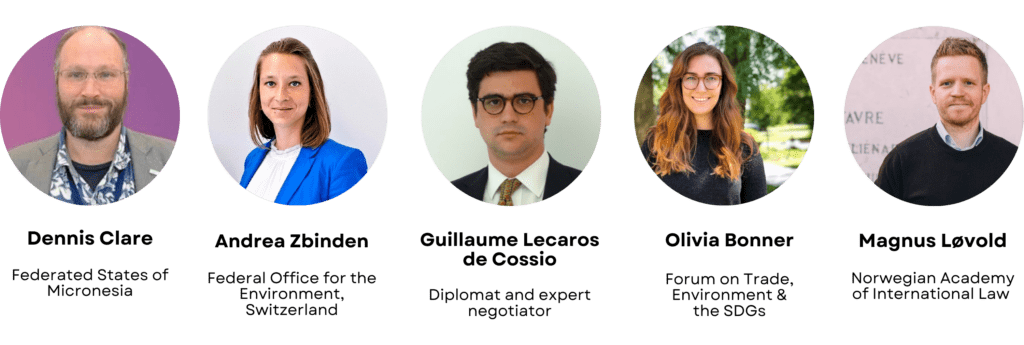
The session brought together a wide range of participants from governments, international organisations, civil society, and the research community, reflecting the continued interest in how the negotiations can move forward productively. Following a short presentation of the research findings by the Centre’s Director, Dr Antaya March, the webinar featured an open panel discussion with Dennis Clare, Guillaume Lecaros De Cossio, Magnus Løvold, Andrea Zbinden, and Olivia Bonner, moderated by Lizzie Fuller. The discussion was designed as a live exchange between panellists, allowing for more direct reflection on what a credible path to agreement might look like in practice.
The webinar was based on new research by the Global Plastics Policy Centre examining how the treaty negotiation process itself has functioned across the INC process to date. Drawing on interviews and focus groups with members and observers involved in the negotiations over the past three years, the report highlights that progress has been shaped not only by political positions, but also by process design, procedural dynamics, leadership factors, and the extent to which the negotiations have enabled meaningful dialogue, technical understanding, and text development to advance together concurrently.
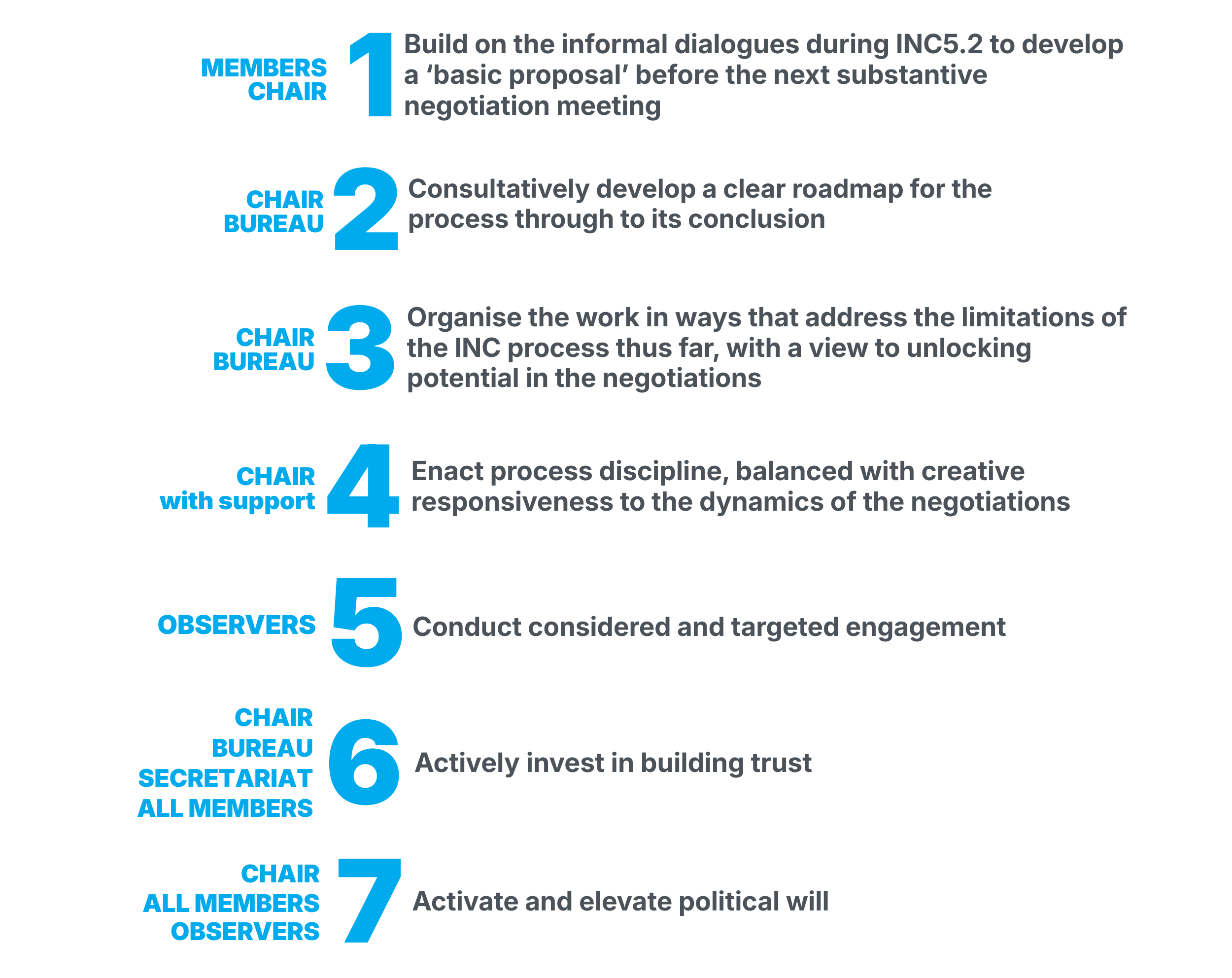
To help inform thinking on the way forward, the report sets out a series of recommendations for strengthening the process through its remaining phases. These include:
- building on the informal dialogues at INC5.2 to develop a basic proposal ahead of the next substantive negotiation meeting
- developing a clear roadmap for the process through to its conclusion
- organising the work in ways that better connect technical understanding, meaningful dialogue, and text development
- enacting stronger process discipline while balancing this with agility and responsiveness to negotiation dynamics
- actively investing in trust across the process
- activating and elevating political will
- encouraging considered and targeted engagement by observers that supports negotiators and the needs of the process
A central theme in the discussion was that a credible path to agreement depends not only on political ambition, but on creating the right conditions for collective problem-solving and future proofing the treaty in the absence of it being ‘perfect’. Panellists also reflected on the need for foundational alignment across all participating countries:
“Its very difficult to negotiate the details, if we haven’t agreed on the fundamentals”
Andrea Zbinden
They also agreed with the need for a clear roadmap to ensure a clear path forward and provide clarity for Members on what to expect, and the need for the INC to start making decisions on matter of substance, or at least developing a basic proposal ahead of the next substantive negotiations (INC5.4):
“A lot of discussions have been opened on a lot of issues that are super complex, but not a single item of substance has really been closed, and that makes things very messy…often we have heard “nothing is agreed until everything is agreed” in this process, and i wonder if we need to challenge that a little bit, as we need to start thinking about this process moving forward as a sequence of agreements, and we need to agree on something”
Magnus Løvold
“[the chair and process] needs to be transparent so members don’t get surprises… and [the leadership’s responsibility is] developing and anchoring a draft that could be a good basis for discussion – members need to feel as though they are somewhat recognised, but at the same time where divergence can be expressed in a constructive manner to see if there are landing zones”
Guillaume Lecaros De Cossio
The exchange was honest and thoughtful, and reflected the depth of engagement across this space, as well as the level of attention being given to what an effective treaty could require in practice.
As attention now turns to the next phase of the process, the online session underscored that progress will depend not only on ambition, but on whether the conditions are created for the negotiation process to move forward in a more focused and constructive way.
Below you can view and download the webinar slide deck.