The art that defines the moment
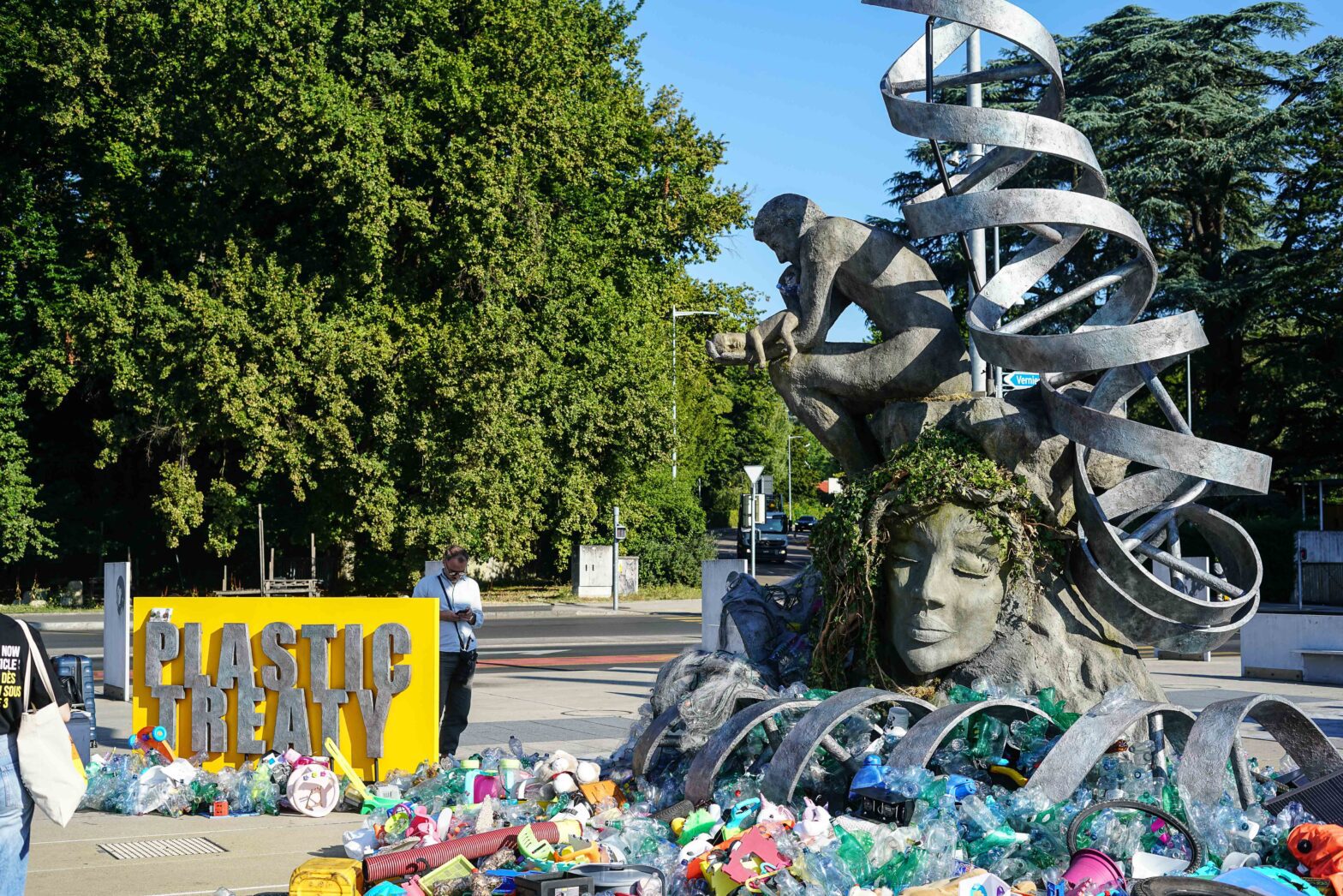
In this guest blog, Benard Ogembo, environmental journalist and plastic waste campaigner, speaks with Benjamin Von Wong about the inspiration behind his eye-catching art installation on plastic pollution, recently installed outside the United Nations Headquarters in Geneva.
When French artist Auguste Rodin made a bronze figure of a thinking man for his famous composition, The Gates of Hell, he could not have possibly imagined the level of popularity the piece would follow many years after his death.
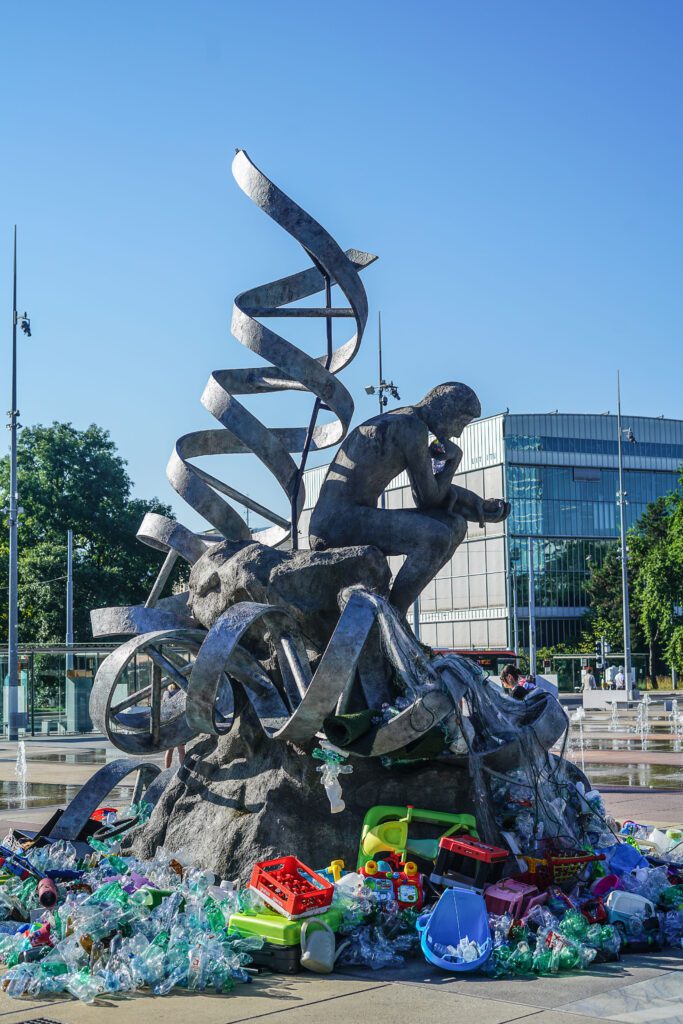
As the world gathers in Geneva to negotiate a global plastic treaty, a ‘sculptural remix’ of Rodin’s famous sculpture stands outside the United Nations headquarters. Measuring six metres tall, and submerged in plastic waste, the Thinker’s Burden depicts a naked, seated man engrossed in thought. Perched atop a globe representing Mother Earth, the ‘thinker’ clutches a handful of crushed plastic bottles in one hand while gazing down at a baby cradled in the other — a stark reminder of the toxic legacy we risk passing on if we do not agree to an ambitious treaty.
The sculpture is the latest piece by Canadian artist and activist Benjamin Von Wong, who is known for the Turn Off The Plastic Tap sculpture that appeared at the United Nations Environment Assembly (UNEA) 5.2 in March 2022. It was during UNEA 5.2 that the resolution was adopted to develop a legally binding instrument on plastic pollution, now known as the Global Plastics Treaty. But how did the latest artwork come to be? And what does it remind the delegates from 183 countries now gathered at Palais des Nations aiming to forge a consensus around brokering a global plastic treaty?
“If we want to protect the health of this generation and future generations, then we need to think about the toxic chemicals that are polluting our environment. Likewise, we should cut plastic production. This is the only route for an ambitious plastics treaty,” explains Benjamin Von Wong.
“We are seven months behind schedule, and that is why we decided to have the sculpture of a Thinker, revealing the need to ponder hard enough to save the world. What should we really do? It is such a big problem, and the treaty is not moving. But the Thinker has never moved. As he thinks with a plastic bottle in his hand and a little baby on the other, he carries the burden of trying to figure out what to do for the next generation,” says Benjamin. “The Thinker’s dilemma is whether to throw away the baby’s future or banish the crushed bottles” he adds.
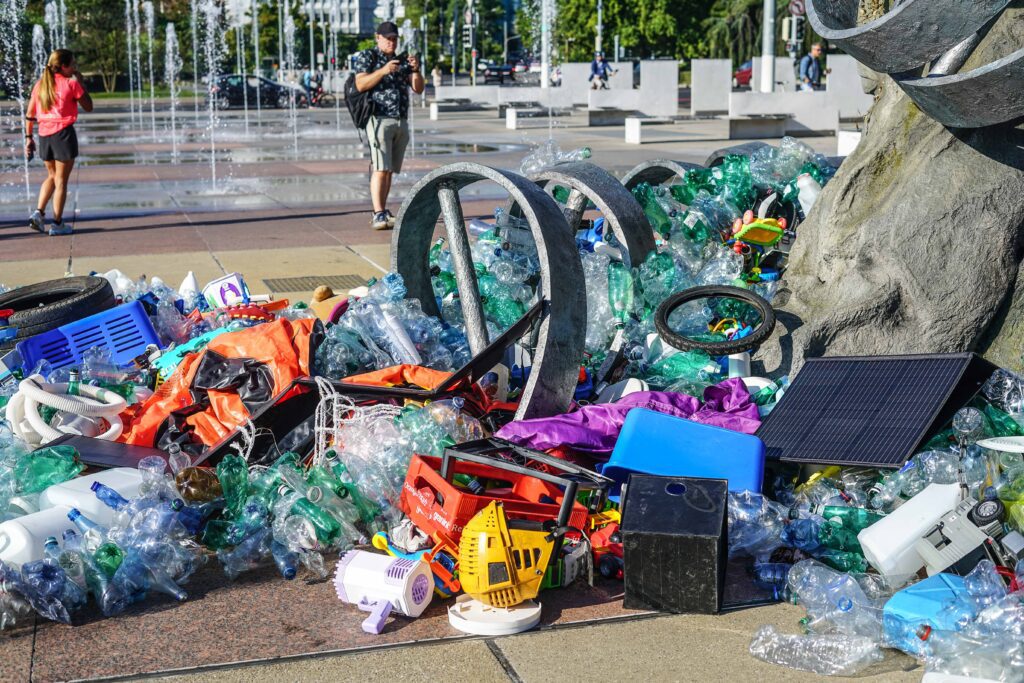
Over the course of the negotiations, the Thinker’s Burden sculpture will gradually be engulfed by bottles, toys, fishing nets and other waste. More and more plastic will be added to the art installation to show the growing cost that is being passed on to future generations.
Dr Cressida Bowyer, Associate Professor in Arts and Sustainability at the University of Portsmouth and Deputy Director of the Revolution Plastics Institute, feels that Benjamin picked the right moment to include a human health element to his work, since health has become more central to discussions about the plastics treaty.
“It’s a clever concept. He’s incorporated a DNA strand into the sculpture, which is particularly powerful given the concern that microplastics and nanoplastics are small enough to penetrate our cells and interact with and damage our DNA — a mechanism that could cause disease,” she explains.
There is a growing body of scientific evidence regarding the presence of microplastics in our bodies and the environment, as well as decades of evidence on the health harms of toxic chemicals that leach from plastics. A recent report in The Lancet highlights that plastics can harm human health at every stage of the plastics life cycle and across all stages of human life, with vulnerable populations — such as those who live or work close to plastic production or disposal sites — bearing a disproportionate burden. The report also estimates that the economic costs linked to these health impacts exceeds US$1.5 trillion annually.
Dr Bowyer and her team at the Revolution Plastics Institute at the University of Portsmouth has been pioneering the use of theatre, music and visual arts to research issues around plastic pollution for almost a decade. Cressida has used these approaches with diverse groups including grassroots communities, industry leaders and policymakers, including wastepickers in Kenya. The Thinker’s Burden demonstrates how art can spark imagination and reflection. Passersby are stopping, photographing and pondering. The sculpture highlights the issue of plastic pollution, just a few hundred metres from where the global plastics treaty is being negotiated.
“This installation is a call to action,” Von Wong explains.
“As plastic production surges past 400 million tonnes annually, half destined for single-use, our planet and future generations pay the price. We must think harder, act bolder, and push for an ambitious global treaty to curb this crisis.”
He added “The toxins that are used to create the plastics. All of these are contaminating us and future generations. It’s entering our blood, our body, our balls, our breasts, everything. It’s something that we’ve completely lost control of. I think that if we can get all the negotiators in the room to ponder why we need a plastic treaty — which is to protect human health and well-being of this generation and all generations to come — then they’ll realise that we have a problem with plastics to solve right here, right now.”
Von Wong’s Thinker’s Burden demands that the world’s leaders do more than think. It demands that they act before the plastic tide drowns us all.
By Benard Ogembo