Webinar insights: Recommendations for reuse in Southeast Asia
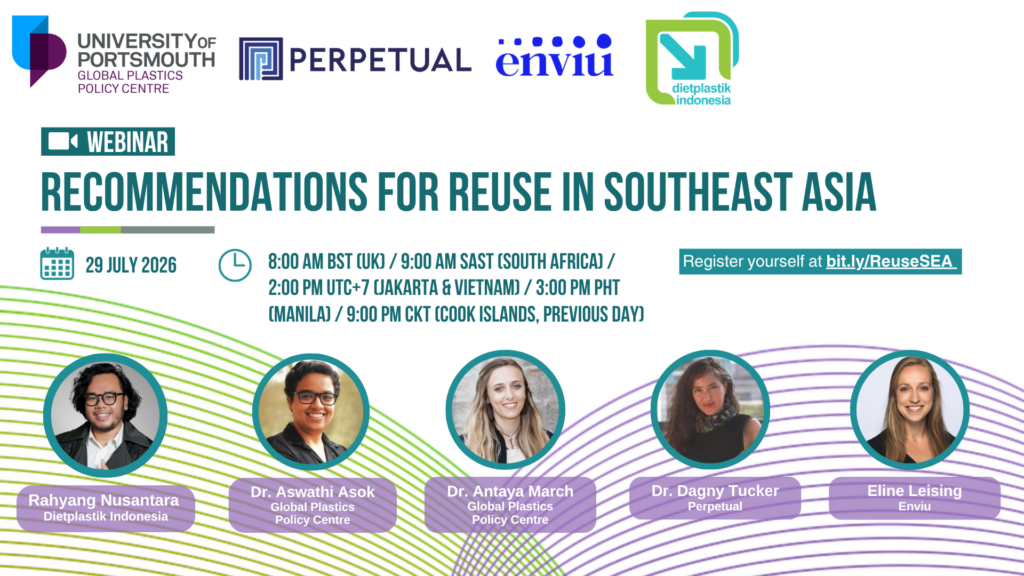
On the 29th July 2026, organisations working on reuse in Southeast Asia came together for a webinar exploring how public policy can help scale reuse systems across the region.
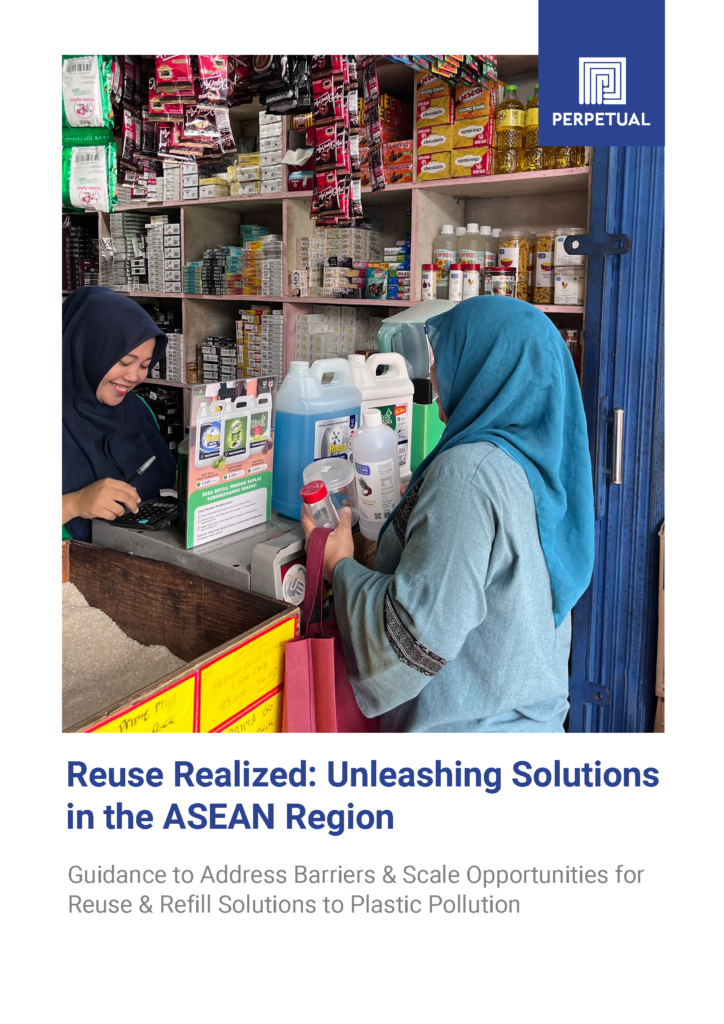
The webinar presented the findings from two collaborative and complimentary reports: “Designing effective reuse policy: Regional recommendations for Southeast Asia, led by the Global Plastics Policy Centre,” and “Reuse Realized – Unleashing Solutions in the ASEAN Region”, led by Perpetual. Both reports were done in collaboration with Enviu and Dietplastik Indonesia. These reports together provide new evidence on the barriers, opportunities and practical actions needed to support reuse at scale.
The session was introduced by the Global Plastics Center Director Dr Antaya March and then followed with discussions on the current reuse landscape in Southeast Asia by experts including: Rahyang Nusantara from Dietplastik Indonesia, Dr Aswathi Asok from the Global Plastics Policy Centre, Dr Dagny Tucker from Perpetual and Eline Leising from Enviu.
Key messages
A major focus of the discussion was the legacy of reuse present in Southeast Asia that have been outcompeted by inexpensive single-use plastics which benefit from established supply chains and convenience.
Across the discussion, speakers highlighted several common barriers to scaling reuse:
- Policy ambition is growing, but implementation remains limited.
- Businesses need greater policy certainty before investing.
- Upfront costs and limited financing continue to constrain reuse systems.
- Existing regulations can unintentionally hinder refill and reuse models.
Despite these challenges, the region presents significant opportunities. Existing refill cultures, successful reuse businesses and strong community based systems provide a solid foundation for future growth. There are multiple examples of effective reuse organisations within Southeast Asia encompassing 4500 end consumers and 1400 micro entrepreneurs within the fast moving consumer goods industry and 110 active reuse and refill stations.
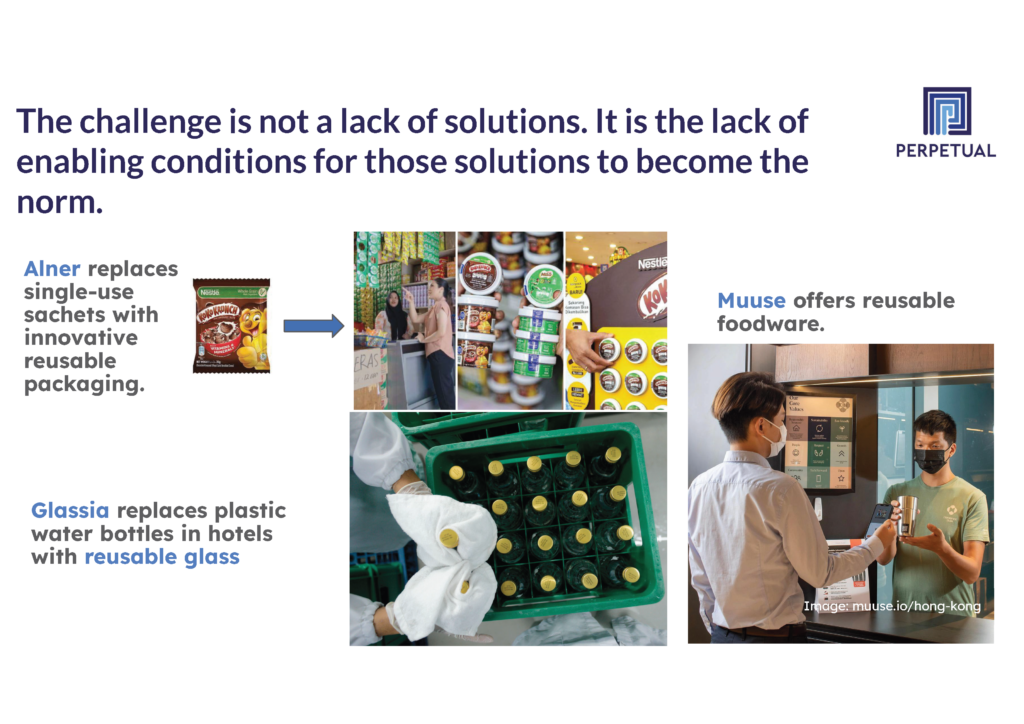
We know reuse works- we need to create the conditions that allows reuse to compete with the linear economy.
Dr Dagny Tucker, Co-founder, Perpetual
Governments often ask what new policy they should introduce for reuse. Our research suggests a better question is: which existing policies are preventing reuse from succeeding?
Dr Antaya March, Director, Global Plastics Policy Centre
The webinar concluded with some key priorities for policymakers:
- Create clear national directions for reuse with measurable mandatory targets and clearly defined responsibilities.
- Remove regulatory barriers and provide clear guidance for businesses.
- Make reuse financially viable by investing in infrastructure and creating incentives that support business transition.
- Use EPR to drive reuse by embedding waste prevention, ringfenced reuse funds and financial incentives, not only for recycling.
- Design reuse systems that work for informal and community actors
Read the reports